
MGM-15 Explained: What This Kratom-Derived Alkaloid Actually Is (and Why “Potency” Isn’t the Whole Story)
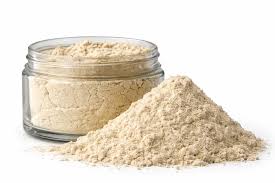
What Is MGM-15?
MGM-15 is the market name for dihydro-7-hydroxymitragynine, also abbreviated DHM or DH-7OH-MIT in scientific literature. It’s a semi-synthetic compound derived from mitragynine, the primary alkaloid in the kratom plant (Mitragyna speciosa).
The chemistry happens in stages:
- Mitragynine — the main naturally occurring alkaloid in kratom leaf.
- 7-hydroxymitragynine (7-OH) — a minor alkaloid that occurs naturally in kratom in very small amounts, but which is far more potent at opioid receptors than mitragynine.
- MGM-15 (dihydro-7-OH) — a laboratory-modified version of 7-OH, chemically altered to change its receptor activity, stability, and duration of effect.
That last step matters. MGM-15 does not occur in the kratom plant on its own — it’s a manufactured molecule that starts with a kratom-derived building block. Medicinal chemists originally developed compounds in this family in academic pain-research settings, with the goal of creating orally active opioid agonists as potential analgesics. It has since moved out of the lab and into the unregulated botanical-extract marketplace, well ahead of any formal human safety testing.
MGM-15 as an Alkaloid: How It’s Classified
Chemically, MGM-15 is an indole alkaloid, part of the same structural family as mitragynine and 7-OH. But classification by chemical family isn’t the same as classification by effect. While mitragynine has a mixed pharmacological profile, both 7-OH and MGM-15 behave much more like classical opioids — meaning their risk profile has more in common with prescription or illicit opioids than with traditional kratom tea or leaf powder.
This distinction is the source of most of the confusion (and marketing ambiguity) around MGM-15. “It’s derived from a plant alkaloid” is technically true. It does not mean the compound itself is natural, mild, or comparable to raw kratom.
MGM-15 Potency: How Strong Is It?
Potency is the number most vendors lead with, and it’s also the number most people misunderstand.
Laboratory binding studies describe MGM-15 as having higher binding affinity at mu- and delta-opioid receptors than 7-hydroxymitragynine — and 7-OH itself is already substantially more potent than mitragynine. In practical terms, that means a small quantity of MGM-15 can produce opioid-receptor activity comparable to, or exceeding, that of some prescription opioids.
This is precisely why potency shouldn’t be treated as a selling point in isolation. Higher receptor affinity generally tracks with:
- A narrower margin between an active dose and an overdose
- Faster development of tolerance
- More pronounced withdrawal on discontinuation
- Greater risk when combined with other central-nervous-system depressants (alcohol, benzodiazepines, other opioids)
Is MGM-15 a Full Agonist?
This is one of the most searched — and most safety-relevant — questions about the compound.
Based on available receptor-binding research, MGM-15 behaves as a strong, close-to-full agonist at the mu-opioid receptor, distinguishing it from mitragynine, which acts more like a partial agonist with a ceiling effect on some measures. 7-OH already shifts the kratom alkaloid family further toward full-agonist behavior than mitragynine, and MGM-15 appears to push that trend even further.
The practical significance: full or near-full agonist activity generally means the risk of respiratory depression — the mechanism behind most opioid overdose deaths — scales more directly with dose. This is a materially different risk profile than traditional kratom leaf, and it’s one of the central reasons addiction-medicine clinicians classify MGM-15 alongside other opioid-class substances rather than alongside conventional kratom products.
MGM-15 Half-Life: What’s Actually Known
Precise, peer-reviewed pharmacokinetic data on MGM-15 in humans is still limited — a direct consequence of how new this compound is to the consumer market and how little formal clinical research exists on it. What preliminary data and structural comparisons suggest:
- Because MGM-15 is a modified, more metabolically stable version of 7-OH, some researchers and formulators describe it as having a longer effective duration than 7-OH alone, which is part of what’s marketed as a “cleaner” or more “defined” effect window.
- A longer or more stable half-life doesn’t equal a safer profile. It can mean a longer window during which sedation and respiratory depression risk persist, and it can complicate dosing for people who aren’t aware the compound clears more slowly than the kratom alkaloids they may be used to.
- Because rigorous, published half-life data in humans is sparse, any specific number you see cited for MGM-15 online should be treated as provisional, not clinically established.
MGM-15 vs 7-OH: What’s the Difference?
| Factor | 7-OH (7-hydroxymitragynine) | MGM-15 (dihydro-7-OH) |
|---|---|---|
| Origin | Occurs naturally in kratom leaf in trace amounts | Lab-modified derivative of 7-OH; not found naturally in kratom |
| Receptor activity | Potent opioid agonist, more potent than mitragynine | Reported to bind more strongly than 7-OH at mu/delta receptors |
| Regulatory attention | Named by the FDA as an emerging public health concern | Newer to market; drawing similar scrutiny from addiction-medicine researchers |
| Human safety data | Limited but growing | Very limited |
| Typical product form | Extract shots, tablets, enhanced powders | Primarily tablets, marketed as “precision” or “enhanced” alkaloid products |
The short version: MGM-15 isn’t a milder alternative to 7-OH, and it isn’t a return to “natural” kratom. Available evidence points the other way — it’s a further step away from the plant and further toward concentrated opioid-receptor activity.
The Regulatory and Public Health Picture
The FDA has already flagged 7-OH-enhanced products as an emerging public health concern and has called for stronger controls on certain 7-OH formulations. MGM-15 sits downstream of that same concern, as a compound one additional chemical step removed from the plant and, according to available binding data, potentially more potent still.
Legal status for MGM-15 specifically is unsettled and moving quickly. Because it’s a novel compound rather than a scheduled substance in most jurisdictions as of this writing, it has been sold as a “research chemical” in some markets — a label that has historically preceded formal scheduling once safety and abuse-liability data accumulate. Anyone considering an MGM-15 product should check current state and federal status directly, since this can change with little notice.
MGM-15 is a real, chemically documented compound — but “kratom-derived” undersells what it actually is. The evidence available so far describes something closer to a novel, largely unstudied opioid agonist than a botanical supplement: high receptor affinity, likely near-full agonist activity, an unclear but possibly extended half-life, and essentially no controlled human safety data. That combination is exactly what addiction-medicine clinicians look for as red flags in any new substance entering the consumer market.
If you’re evaluating MGM-15 because you’re already using kratom or 7-OH and are looking for something “stronger,” it’s worth pausing on why more potency is the goal — that pattern is often an early sign of tolerance and escalating use, which are themselves manageable and treatable.
Getting Help
If you or someone you know is struggling with kratom, 7-OH, MGM-15, or opioid use more broadly, you don’t have to navigate it alone:
- SAMHSA National Helpline: 1-800-662-4357 (free, confidential, 24/7)
- Talk to a physician or addiction-medicine specialist before stopping any opioid-class substance abruptly, since withdrawal can be medically significant.